
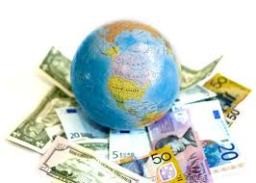


Economics – the word itself makes most of us run away at the sound of it, because it sound so esoteric, or we think so. The terms or jargons tend to scare one and all that the minute you hear that the other person is an Economist, you can safely assume what they would speak would be greek and latin. You want to switch away or cross the road.
Let us start with the two most deadly terms of economics that we have heard very frequently over the last decade – `Recession’ and `Depression’.
Recession would be connected more to ocean and rivers in terms of the waves or the river levels receding, and that would bring cheer or glum depending on the situation one is in. This would be music for people in a flooded town or coastal areas, for this indicates some amount of calm, after some damage has been inflicted. While, for people in locations looking for water, this would be a cause for concern. In economics this is purely a term for concern.
Depression would be connected to pressures of wind or atmosphere over a particular area, indicating a cyclone or anti-cyclone as a resultant conditions. Again this would bring in devastation or some pleasant climate during tough times. In economics it means blaming other factors beyond one’s control.
Bank is a term from geography, but it has become such an important term in economics that no one would believe you that Bank is something borrowed from Geography. You have a river bank essentially denoting the land adjacent to the river. So rather than flow with the current of the river or swim up against it you can be comfortable on the banks of the river. Civilizations get set on the banks.
The act that all of us indulge in very frequently in a month – go to a `bank’, where we all have bank accounts and accordingly deposit cash, and withdraw when required. Deposit would have been with reference to the rocks and minerals for sure. And these valuable deposits are being exploited for monetary purposes to boost economies of particular nations.
Terms that get confusing used as a part of economics is obviously Finance and Budget, and one can argue endlessly about the fact that this is different or has got nothing to do with economics, but their health determines what is called as an economy. Finance and Budget are things to do with allocation, and this is with reference to resources – again something derived from geography. This is all determined by the dynamics of demand and supply which again has a major reference in Economics too.
Latitudes and Longitudes determine the time difference by four minutes every degree, and maybe the health of a country’s economics also changes by the same count. No wonder there is a East-West divide or a North South difference.
Layers of earth in geography perhaps inspired some economists to classify people as spheres – being an outer silicate solid crust, a highly viscous mantle, a liquid outer core that is much less viscous than the mantle, and a solid inner core. Economics uses two terms micro and macro environment to explain what is happening within and outside, signifying closer and larger perspectives on affairs.
Environment again is a term from geography and science. The Irony is that while Economics is also regarded as Science, Economists are not Scientists!
The next time you listen to economic terms — just open a geography text book and you will perhaps understand the subject far better.